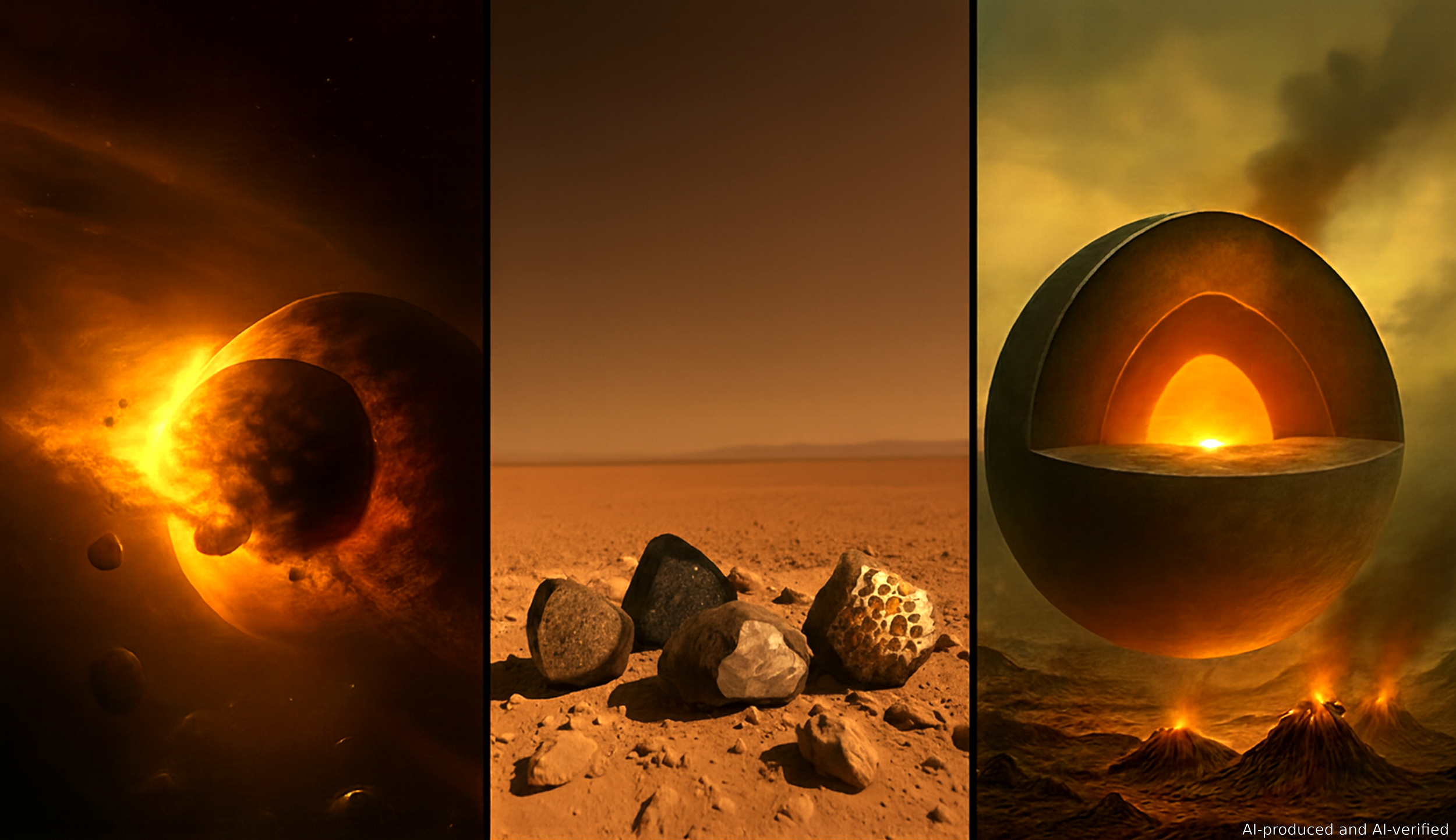
Inner Solar System
Workshop
Abstract Booklet
Rice University • May 12–14, 2026
|
Organized by session; poster abstracts follow the poster-list order |
|
DAY 1 - TUESDAY, MAY 12 |
|
Morning: Accretion in the Inner Solar System |
Chairs: Seth Jacobson, Sanskruti Admane
|
09:00-09:50 | Keynote | Formation of terrestrial planets in the solar system |
|
Matthew Clement — Johns Hopkins University Applied Physics Laboratory |
|
Abstract |
|
Our understanding of terrestrial planet formation has grown markedly over the past 25 years, yet key questions remain. If the protoplanetary disk's surface density profile was uniform, N-body accretion models predict Earth-mass planets forming throughout the inner solar system and asteroid belt. Consequently, 'classic' studies utilizing these initial conditions consistently yielded overly massive analogs of Mercury, Mars, and the asteroid belt. This discrepancy can generally be resolved in two ways: (1) these regions of the solar system never possessed much solid material to begin with, or (2) dynamical processes removed excess planetary building blocks before the planets finished growing. While many models along these lines have been proposed, few remain viable in light of a growing collection of dynamical and cosmochemical constraints. Among others, important constraints that have been increasingly applied to models in recent years include differences in the inferred bulk and isotopic compositions of the planets, the complex dynamical distributions of compositional classes in the asteroid belt, and the relative timing of key events. I will review the processes involved in terrestrial planet formation, the current landscape of proposed models—including their strengths and weaknesses—and the largest outstanding questions. Specifically, I will focus on the persistent inability of models to replicate the peculiar qualities of Mercury and the role of pebble accretion in the inner solar system. |
|
09:50-10:10 | Contributed | The Impacts and Subsequent Debris that Dominate the Early Instability Scenario |
|
Emily Elizondo — Michigan State University |
|
Abstract |
|
The number and frequency of giant impacts during terrestrial planet formation is unknown. All formation scenarios presume at least one a giant impact occurred, that which formed the Moon. This kind of impact likely resulted in the ejection of impact debris into heliocentric orbit. Because the Moon-forming impact is a requisite of all terrestrial planet formation scenarios, debris therefore must be produced in all scenarios. Moreover, the generation of debris can be used as a tracer for the intensity and frequency of giant impacts, as increased frequencies and intensities should correlate to a higher debris production rate. However, most work either neglects debris production or does not resolve it well enough to make claims about its fate. This work uses the astrophysical N-body integrator SyMBA coupled with a sophisticated collisional algorithm to quantify collision occurrences and track the production and trajectory of impact debris during terrestrial planet formation. We model the “Early Instability” scenario, in which we vary the timing of a giant planet orbital instability (this is poorly constrained) and run the simulations for 200 Myr. On average, < 50% of all collisions in each simulation were debris producing, with the most common debris producing impact type being ~30% of all collisions. Debris producing collisions also occur more frequently in the later half of the simulations when compared to the non-debris producing impacts. We find that in ~40% of our simulations, surviving impact debris resides in the asteroid belt, with many of these simulations emplacing an overabundance of mass in this region. Conversely, in all other simulations, no debris was placed in the asteroid belt. The differences between our simulation results may be due to inadequate debris particle resolution or because we did not account for mass loss via debris vaporization in our model, which may be an important factor in giant impact processes. |
|
10:10-10:30 | Contributed | Pebble accretion for Earth’s composition and water delivery |
|
Susmita Garai — University of New Mexico |
|
Abstract |
|
Two leading models of planet formation invoke either stochastic collisions among km-sized planetesimals or pebble accretion of sub-mm–cm solids regulated by gas drag. While collision-based models typically require tens to hundreds of millions of years to assemble terrestrial planets, pebble accretion can produce Mars to Jupiter-mass bodies within the lifetime of the protoplanetary disk. Although widely accepted for the rapid growth of giant planet cores, the role of pebble accretion in forming terrestrial planets, including Earth, remains debated. Here, we investigate some consequences of pebble accretion for Earth’s origin. We show that no combination of known chondritic meteorites reproduces Earth’s major element composition, whereas a mixture of chondritic components: metal grains, chondrules, and refractory inclusions, matches Earth’s Fe, Ni, Si, Mg, Ca, Al, and O within uncertainties. Accretion of such pebbles naturally yields sufficient mass inside 1 AU to account for the terrestrial planets. The best-fitting pebble mixture also reproduces Earth’s moderately volatile depletion pattern, siderophile partitioning between mantle and core, and the mantle Hf-W anomaly, requiring dominant pebble accretion followed by a late-stage impact(s). Laboratory experiments further demonstrate that hydrogen reduction of iron oxide as pebbles fall through a thick H-rich atmosphere generates prodigious amounts of water in Earth’s primitive atmosphere, while explaining volatile loss and the mantle’s Fe/Mg ratio. These results explain key geochemical observations that collisional models do not readily account for. We conclude that pebble accretion was the dominant process in building a ~0.6-0.7 Earth-mass proto-Earth and a nearby ~0.3-0.4 Earth-mass impactor (Theia), with late collisions completing assembly. This framework also implies that water-rich exoplanets may inherit substantial water inventories during formation, with important implications for planetary habitability. |
|
11:00-11:25 | Invited | Dynamical Origins of the Inner Solar System's Chemical Architecture |
|
Max Goldberg — Observatoire de la Côte d'Azur |
|
Abstract |
|
The models that most successfully reproduce the orbital architecture of the Solar System terrestrial planets start from a narrow annulus of material that grows into embryos and then planets. However, it is not clear how this ring model can be made consistent with the chemical structure of the inner solar system, which shows a reduced-to-oxidized gradient from Mercury to Mars and a parallel gradient in the asteroid belt. We propose that there were two primary reservoirs in the early inner solar system: a narrow, refractory-enriched ring inside of 1 au; and a less massive, extended planetesimal disk outside of 1 au, with oxidation states ranging from enstatite chondrites to ordinary chondrites. I will discuss various dynamical processes—most importantly an inwardly sweeping secular resonance—that assemble the terrestrial planets while leaving behind unaccreted planetesimals to be implanted into the asteroid belt. This scenario is uniquely consistent with a wide range of dynamical, chemical, and isotopic constraints for bodies interior to Jupiter and ties together the compositional and orbital architectures of the rocky Solar System. |
|
11:25-11:45 | Contributed | The late formation of chondrites as a consequence of Jupiter-induced gaps and rings |
|
Baibhav Srivastava — Rice University |
|
Abstract |
|
Accretion ages of the first planetesimals - parent bodies of magmatic iron meteorites - suggest that they formed within the first 0.5 to 1 million years of Solar System history. Yet, planetesimal formation appears to have occurred in at least two distinct phases. A temporal offset separates early-forming bodies from later-forming chondrite parent bodies, which accreted 2 to 3 million years after the Solar System onset - an unresolved aspect of Solar System formation. Here, we use numerical simulations to show that Jupiter's early formation reshaped its natal protoplanetary disk. Jupiter's rapid growth depleted the inner disk gas and generated pressure bumps and dust traps that manifested as rings. These structures caused dust to accumulate and led to a second-generation planetesimal population, with ages matching those of noncarbonaceous chondrites. Meanwhile, the evolving gas structure suppressed terrestrial embryos' inward migration, preventing them from reaching the innermost regions. Jupiter likely played a key role in shaping the inner Solar System, consistent with structures observed in class II and transition disks. |
|
11:45-12:05 | Contributed | Chondrite Parent Bodies as Escaped Satellites of Proto-Planetary Embryos |
|
Rogerio Deienno — Southwest Research Institute |
|
Abstract |
|
Chondrites are composed of partially molten material, known as chondrules, surrounded by fine-grained matrix. They date from the earliest times in solar system history. However, their role in the formation of the planets is uncertain because, in part, it is not clear how they were produced. Here we show a robust pathway to form the asteroids that contain chondrules in embryo-embryo collisions during the late stages of terrestrial planet formation. Melted material from these impacts cool into chondrules and mix with unmelted material in embryo-centric disks that formed from the ejecta. This material accretes into numerous asteroid-sized satellites. These objects are later liberated from their host due to gravitational encounters with other embryos, and enter into orbit about the Sun as the parent bodies of chondrites. This mechanism provides a pathway to form chondrites in solar system history at times commensurate with measured ages of chondrules in chondritic meteorites, while explaining their physical properties and their ensemble properties within singular meteorites or meteorite classes. |
|
DAY 1 - TUESDAY, MAY 12 |
|
Afternoon: Building Blocks of Rocky Planets: Volatiles and Isotopic Tracers in Planetary Materials |
Chairs: Lucia Bellino, Sumedha Desikamani
|
13:30-14:20 | Keynote | Origins of Volatiles in the Inner Solar System |
|
Conel Alexander — Carnegie Institution for Science, Earth & Planets Laboratory |
|
Abstract |
|
The volatiles in the chondrites, which formed 2-4 Myr after Solar System formation, were accreted as ices and organic matter in roughly CI-like matrices. This was the case for both the originally outer Solar System carbonaceous chondrites (CCs) and the inner Solar System non-carbonaceous chondrites (NCs), although the NC enstatite chondrites (EC) may not have accreted ices. The D/H ratios of the water accreted by the CCs were much lower than water in molecular clouds (MCs) and comets [1], and were much less 16O depleted than that of water produced by UV self-shielding in the presolar MC or the outer Solar System [2]. This suggests that most of the water was thermally equilibrated in the nebula prior to CC accretion. The D/H ratios of water in ordinary and Rumuruti chondrites (OCs+RCs) are higher than in all CCs [1], and most or all comets. However, this may be due to parent body processes [3], although there are hints that the OC+RC water was more 16O-poor than the water accreted by the CCs [4]. In the most primitive chondrites, ~10 % of the H and most of the C, N and noble gases are in or associated with organic matter [5], although the ices contained some CO2 and NH3 (now in carbonates and salts, respectively). Large D and 15N enrichments suggest that the organics, or their precursors, formed in the presolar MC or the far outer Solar System. However, compared to comet 67P [6, 7], the organic abundances in CC matrices are an order of magnitude lower and D enrichments are also lower, again perhaps consistent with thermal processing of much of the dust in chondrite matrices [8]. There is growing evidence that the parent bodies of iron meteorites and achondrites, which accreted ~1 Myr after Solar System formation, also accreted ices [9]. However, internal heating and reactions (e.g., Fe + H2O = FeO + H2) that led to their loss [10]. If Earth formed rapidly and it would have acquired a primordial nebula atmosphere [11], but whether this can explain the abundances and isotopes of all the volatiles in the Earth remains to be demonstrated [12]. Perhaps the best evidence for an early primordial atmosphere are the solar-like Ne isotopic compositions of the Earth’s mantle [13]. However, the majority of Earth’s noble gases are in the atmosphere and atmospheric Ne is not solar-like isotopically, suggesting that not only did most of the atmosphere not degas from the mantle but other sources for Earth’s volatiles are needed. Measurements of comet 67P suggest that comets could contribute up to ~22 % of the heavier noble gases but ≤1 % of H and C, and at most a few % N [14, 15]. Zinc isotopes show that CCs were significant sources of Earth’s moderately volatile elements [16, 17]. CM and CI chondrites appear to be the dominant types of CC in the asteroid belt, and the CMs, in particular, have similar isotopic compositions to the volatiles in the bulk silicate Earth (BSE). However, the BSE abundances of N and, perhaps, H and C are very depleted relative to what CM/CI sources would predict [18]. Impact stripping of early outgassed atmospheres has been invoked to explain the N depletion, but this is seemingly in conflict with the lack of relative depletions in light noble gases. Hence the appeal by some to reservoirs in the core and deep mantle. [1] Alexander C.M.O’D. et al. (2012) Science 337:721-723. [2] Clayton R.N. and Mayeda T.K. (1999) GCA 63:2089-2104. [3] Sutton S. et al. (2017) GCA 211:115-132. [4] Choi B.-G. et al. (1998) Nature 392:577-579. [5] Alexander C.M.O’D. et al. (2017) Geochemistry 77:227-256. [6] Paquette J.A. et al. (2021) MNRAS 504:4940-4951. [7] Bardyn A. et al. (2017) MNRAS 469:S712-S722. [8] Alexander C.M.O’D. et al. (2017) M&PS 52:1797-1821. [9] Grewal D.S. et al. (2024) Nat. Astro. 8:290-297. [10] Newcombe M.E. et al. (2023) Nature 615:854-857. [11] Young E.D. et al. (2023) Nature 616:306-311. [12] Lammer H. et al. (2020) Icarus 339:113551. [13] Williams C.D. and Mukhopadhyay S. (2019) Nature 565:78-81. [14] Marty B. et al. (2016) EPSL 441:91-102. [15] Marty B. et al. (2017) Science 356:1069-1072. [16] Steller T. et al. (2022) Icarus 386:115171. [17] Savage P.S. et al. (2022) Icarus 386:115172. [18] Alexander C.M.O’D. (2022) GCA 318:428-451.
|
|
14:20-14:40 | Contributed | Distribution of 92Nb in the Early Solar System |
|
Prajkta Mane — Lunar and Planetary Institute |
|
Abstract |
|
Supernovae likely contributed directly to the material inventory of the early Solar System, delivering freshly synthesized nuclides to the protoplanetary disk during or shortly after its formation. Meteorites preserve records of these stellar inputs through presolar grains and short-lived radionuclides, yet how distinct supernova-derived dust components were transported, processed, and incorporated into early planetary materials remains poorly constrained. Here we present new high-precision ⁹²Nb–⁹²Zr isotope data for two achondritic meteorites to help constrain how distinct supernova-derived dust components were transported, processed, and incorporated into early planetary materials. The data reveal a heterogeneous distribution of the extinct p-process radionuclide ⁹²Nb in the early Solar System. The elevated initial 92Nb/93Nb ratios recorded in these meteorites require contributions from both Type Ia and Type II supernovae, delivered by presolar carrier phases with contrasting thermal and chemical properties. |
|
14:40-15:00 | Contributed | Heterogenous 48Ca isotopic anomalies in a representative suite of refractory inclusions, insights into the primordial Solar System |
|
Justin Simon — NASA Johnson Space Center |
|
Abstract |
|
In this presentation we
will report 48Ca isotopic heterogeneity from a diverse suite of Ca- Al-rich
inclusions and evaluate the results in the context of previously reported
mass-dependent Ca isotope and both mass-dependent and non-mass-dependent Ti
isotope measurements from the same samples (see Simon et al. 2017, EPSL). The
direct comparison between the isotopic anomalies to the mass dependent Ca and
Ti isotope results provide key insights into nebular processes and
environments in the protoplanetary disk where refractory inclusions and their
precursor materials formed. The discovery of 48Ca isotopic heteogenity within
individual inclusions represents a novel observation for our understanding of
the Solar System first solids and illuminates the potential wealth of
information yet to be revealed by refractory element isotopic studies. |
|
15:30-15:50 | Contributed | Testing Fayalite and Oxygen Isotopes in L/LL Ordinary Chondrites for Parent Body Sources |
|
Allison McGraw — Lunar and Planetary Institute |
|
Abstract |
|
Mineralogical compositions and oxygen isotopes suggest that ordinary chondrites (OCs) may sample compositionally heterogeneous parent bodies or multiple genetically related sources rather than distinct, single asteroids, with L/LL OCs occupying a transitional compositional space between the L and LL groups. To test whether observed overlaps between L and LL chondrites reflect true parent body affinity or instead arise from analytical imprecision and historical data limitations, this project evaluates fayalite olivine compositions and oxygen isotope systematics in L/LL OCs using both legacy datasets and new high-precision measurements. Historical literature data are combined with newly acquired SEM-EDS fayalite measurements supported by EPMA analyses to improve compositional accuracy and assess data reproducibility. Thirteen L/LL OC samples spanning petrologic types 4–6 are analyzed, focusing on equilibrated olivine to minimize metamorphic variability. In parallel, visible to near-infrared spectra are being collected and band parameters measured to strengthen comparisons with asteroid spectral datasets. Together, these approaches aim to clarify whether geochemical and spectral overlaps among L/LL OCs reflect shared parent body evolution or methodological limitations, improving constraints on ordinary chondrite–asteroid linkages in the inner solar system. |
|
15:50-16:10 | Contributed | Novel Stable Isotopes (V, Mg, Sr) as Tracers of Volatility in Planetary Materials |
|
Liam Peterson — Woods Hole Oceanographic Institution |
|
Abstract |
|
Prior works on calcium-aluminum rich inclusions (CAIs) and meteorite parent bodies have identified correlations in their stable V-Sr and V-Mg isotopic compositions, respectively. These correlations for V-Sr and V-Mg isotopes in planetary materials are thought to reflect kinetic isotope fractionations due to partial condensation and evaporation. However, this interpretation is uncertain due to a lack of experimental constraints on the kinetic fractionations of V and Sr isotopes at relevant conditions and for relevant compositions. We have conducted a suite of evaporation experiments on a synthetic Type A CAI-like composition at 1550°C, and pressures (0.1 – 1 mbar) and fO2 (IW −4 to IW) that are thought to be consistent with nebular conditions. Under the range of experimental conditions explored, we find that Sr does not evaporate. Additionally, we find that the evaporation of V is insensitive to the experimental atmosphere (e.g., vacuum, H2-CO2, CO-CO2) contrary to Mg evaporation, which is highly sensitive to the presence of H2. We tentatively interpret the differing sensitivities of V and Mg evaporation to the presence of atmospheric H2 to imply that V-Mg stable isotopes can be used as a qualitative sensor for high temperature evaporation in the presence of H2. We explore this result in the context of planetary materials. |
|
16:10-16:30 | Contributed | Phosphorus-Nitrogen Systematics of First Generation Planetesimals and Life-Essential Element Delivery to Earth |
|
Debjeet Pathak — Rice University |
|
Abstract |
|
Habitability of rocky
planets relies on the Life-Essential Elements’ (LEE) budgets in their
building blocks. The provenance and geochemistry of the planetesimals that
supplied the LEEs to Earth remain debated. Traditional models argue LEE
delivery via outer Solar system chondrites, but their 2–4 Ma accretion ages,
preclude them as the first feedstock. To investigate the initial LEE
distribution, we reconstructed the P-N budget of the iron meteorite parent
bodies (IMPBs), that accreted <1 Ma of Solar System formation.
High-pressure–temperature |
|
DAY 2 - WEDNESDAY, MAY 13 |
|
Morning: Processes and Properties of Interiors, Tectonics, and Habitability |
Chairs: Jiale Mou, Eason Zhang
|
09:00-09:50 | Keynote | Volcanic-Tectonic Modes and Planetary Life Potential |
|
Adrian Lenardic — Rice University |
|
Abstract |
|
Volcanic and tectonic activity affects the climate evolution of terrestrial planets and, by association, the potential that a planet can maintain liquid water at its surface. The Earth’s current volcanic-tectonic mode is plate tectonics. That mode may not have prevailed over the Earth’s geologic history, and it is not presently observed on other terrestrial planets in our solar system. As we have found planets orbiting stars beyond our own, questions regarding the range of volcanic-tectonic modes that terrestrial planets can operate in and how these modes connect to planetary habitability have generated increased interest. A key issue for assessing life potential is the degree to which variable volcanic-tectonic modes can or cannot regulate surface temperatures to allow for liquid water. This talk will review the range of volcanic-tectonic modes that have been proposed for terrestrial planets to date. The degree to which each mode can or cannot regulate planetary surface temperature remains uncertain but general considerations have been put forward and will be reviewed. |
|
09:50-10:10 | Contributed | MAGEC: A unified thermodynamic framework for volcanism, critical-metal enrichment, and planetary habitability |
|
Chen Sun — The University of Texas at Austin |
|
Abstract |
|
Volatile behavior in
evolving magmatic systems links several central problems in Earth and
planetary science: volcanic degassing and eruption dynamics, the transport
and concentration of critical metals, and interior-surface volatile exchange
during planetary formation and evolution. Yet realistic modeling remains
difficult because these systems involve multicomponent volatiles, variable
redox conditions, and coupled equilibria among silicate melts and sulfide,
sulfate, and metallic phases. Many existing models rely on simplifying
assumptions, such as ideal volatile behavior, limited volatile elements,
fixed oxygen fugacity, or restricted phase interactions, and therefore may
miss key thermodynamic feedbacks. |
|
10:10-10:30 | Contributed | Bulk Silicate Composition Controls Mineralogy |
|
Kayla Iacovino — SETI Institute |
|
Abstract |
|
TBD |
|
11:00-11:25 | Invited | The geochemistry of highly reducing conditions |
|
Francis McCubbin — NASA Johnson Space Center |
|
Abstract |
|
Magmatic systems on the Earth, Moon, Mars, and Venus have oxygen fugacities (fO2) that range from about 1 log unit below the iron-wüstite (IW) buffer on the low end and are typically below the hematite-magnetite (HM) buffer on the high end. This range in fO2 represents the primary basis from which our understanding of elemental behavior in geochemical systems is derived. However, there are numerous examples from asteroid parent bodies, such as aubrites, enstatite chondrites, and winonaites, as well as planet Mercury that exhibit fO2’s that are far more reduced than IW–1 and have been reported to be as low as IW–6. The link between fO2 and elemental behavior in geochemical systems is profound because fO2 affects the valence state and bonding behavior of many elements. This significant difference has a fundamental effect on almost all aspects of the physicochemical properties of minerals and melts because O2- is the dominant rock-forming anion and is a defining characteristic of lithophile behavior. Volatility and geochemical compatibility are also affected by oxygen fugacity. Differences in fO2 are important because they exert a first order effect on the petrogenetic evolution of planetary bodies, including the initial distribution of elements in the interior, crystallization paths of magmas, stability of phases, and mineral chemistry. Here, we explore what is known from experimental data and natural observations of highly reduced meteorites to build a geochemical framework for element behavior under highly reducing conditions relevant to Mercury, reduced asteroids, and reduced exoplanets. |
|
11:25-11:45 | Contributed | Metal Saturation and the Redistribution of Hydrogen in Earth’s Mantle |
|
JJ Dong — Caltech |
|
Abstract |
|
Iron disproportionation reactions in mantle silicates can produce metallic iron that drives Earth’s deep mantle toward metal saturation under reduced conditions. Subducting slabs transport hydrated silicates to these depths, where interactions with metallic iron can reduce structurally bound hydrogen in silicates to reduced hydrogen-bearing phases, such as molecular hydrogen or iron hydrides, leaving mantle rocks in effect dry. Using the thermodynamic code HeFESTo with its latest self-consistent treatment of iron-bearing mantle phases, we investigate the stability and distribution of metallic iron in Earth's pyrolitic mantle across a broad range of oxidation states, represented by whole-rock Fe$^{3+}$/$\sum$Fe ratio from 1\% to 10\%. We find that metallic iron is present through much of the lower mantle across this range and, under very reduced compositions of whole-rock Fe$^{3+}$/$\sum$Fe = 1--3\%, extends into the upper mantle. Where subducted water meets metal-saturated regions, hydrous melts may form and migrate upward, rehydrating the overlying mantle or pooling near the transition zone. Metal saturation can thus redistribute hydrogen internally, creating a sharp contrast between a wet shallow mantle and a dry deep mantle. This redox-driven redistribution can decrease mantle silicate water storage capacity by 64--96\% today, to only 0.1--0.8 modern ocean masses, and may explain the viscosity contrast near the upper–lower mantle boundary. Although quantitative estimates of metal abundance and distribution depend on thermodynamic assumptions and remain uncertain above 50 GPa, our results reveal the role of redox reactions between disproportionated iron and subducted water in governing the speciation and redistribution of hydrogen in Earth's mantle. |
|
11:45-12:05 | Contributed | Water in the Solid Earth: insights from hydrous minerals |
|
Mainak Mookherjee — Florida State University |
|
Abstract |
|
The planet Earth is a
unique terrestrial planet because of the abundant presence of liquid water on
its surface. Water is crucial for habitability. Water also influences
geological activity. Given the massive size of the Earth, even if the rocky
mantle contains only trace amounts of water, it is likely to hold the
equivalent of all the water in the modern oceans. |
|
DAY 2 - WEDNESDAY, MAY 13 |
|
Afternoon: Moon Formation, Earth Evolution, and Planetary Surface Processes |
Chairs: TBC
|
13:30-14:20 | Keynote | Moon formation and its links to dynamical and compositional constraints on Earth’s accretion |
|
Robin Canup — Southwest Research Institute |
|
Abstract |
|
Substantial evidence
suggests that the Moon formed as a result of a late giant impact with the
Earth. However, the nature this event remains debated. Giant impacts usually
produce disks that originate primarily from the impactor (“Theia”) rather
than from the target protoearth. Meteorites that originate from Mars, and
nearly all those from parent bodies in the asteroid belt, have isotopic
compositions distinct from that of the Earth. If Theia had been similarly
non-Earth like, and the pre-lunar disk originated primarily from Theia, one
would expect measurable differences between the silicate Earth and Moon.
Instead, the Earth and Moon have essentially identical isotopic compositions
for all non-volatile elements, leading to a so-called “isotopic crisis” for
understanding Earth-Moon origin. |
|
14:20-14:45 | Invited | The Moon-Forming Giant Impact and Earth’s Early Evolution |
|
Sujoy Mukhopadhyay — Arizona State University |
|
Abstract |
|
Even in the absence of a rock record, Earth’s accretion and its early evolution can be probed using decay systems that are now extinct, such as Hf-W and I-Pu-Xe. Here we explore Earth’s accretion, the timing of the Moon-forming giant impact and early outgassing by coupling the Hf-W and the I-Pu-Xe systems. We assume that there are three phases during Earth’s accretion: a main phase of exponentially decaying growth; a late giant impact; and a final addition of ~10% material in smaller bodies. The latter phase is justified by the relative concentrations of moderately volatile to volatile elements, including iodine. We assume that the whole mantle undergoes partial core re-equilibration during a late giant impact, but that the late addition of material is only to the upper 80% of the mantle, the proto-MORB source, while the bottom 20% is the plume source. We find that a giant impact later than 90 Ma does not develop a sufficient Xe isotope difference between the plume and MORB reservoirs, thus placing an upper bound on the timing of the giant impact while a lower bound of 50 Ma is placed by the tungsten isotopes. Under our assumptions, matching the present-day xenon isotopic values require that at most 8% of the 129Xe produced through the decay of 129I in the mantle was retained through accretion, indicating intense degassing of interior volatiles during accretion. Consequently, Earth’s volatile budget was likely concentrated in the surface reservoirs in the aftermath of accretion with the present-day distribution of volatiles resulting from subsequent regassing of the interior. Finally, we find that between the end of Earth’s accretion and the beginning of the Archean, at least 65% of the Earth’s mantle was processed through partial melting. This result indicates voluminous magma generation in the Hadean and that a substantial volume of crustal material was generated by the end of the Hadean. |
|
14:45-15:05 | Contributed | Oxygen isotope constraints on the compositions of impactors to the Earth-Moon system and implications for the diversity of accretionary feedstock in the early solar system |
|
Anthony Gargano — Lunar and Planetary Institute |
|
Abstract |
|
Oxygen isotopes provide a powerful means of tracing the compositions of impactors added to the Earth-Moon system through time because they record lithophile material independent of siderophile behavior, impact retention efficiency, or metal-silicate partitioning. In contrast to Earth, where tectonism, magmatism, and hydrologic cycling have obscured much of the ancient impact record, the lunar regolith preserves a time-integrated archive of exogenous material admixed into the uppermost crust. High-precision analyses of lunar regolith, breccias, and impact-related materials therefore offer a direct window into the isotopic compositions of bodies delivered to the Earth-Moon system over billions of years. This talk explores how oxygen isotope systematics can be used not only to identify impactor components, but also to evaluate the diversity of accretionary feedstock present in the early solar system. In particular, the lunar record can test whether late-stage accretion was dominated by a narrow range of inner solar system materials or by a broader mixture of isotopically and chemically distinct reservoirs, including volatile-rich components. These observations place new constraints on temporal changes in impactor populations, the compositional structure of planetesimal reservoirs, and the extent to which the Earth and Moon sampled a heterogeneous accretionary environment during planetary growth and subsequent bombardment. |
|
15:35-16:00 | Invited | A plate tectonic origin for Earth's hydrogen isotope dichotomy |
|
Amy Ferrick — Yale University |
|
Abstract |
|
The Earth’s hydrogen isotope signature is a primary tool for investigating the origins of terrestrial water and other volatiles. However, this signature is not uniform within the Earth. Whereas seawater D/H resembles that of carbonaceous chondrites and falls outside of the enstatite chondrite range, mantle water is consistent with the enstatite chondrite signature. A recently popularized interpretation is that the Earth’s surface and interior had distinct cosmochemical sources for volatiles during planetary accretion: mantle volatiles were initially sourced by enstatite chondrite-like material, followed by a relatively late shift to a carbonaceous chondrite-like source for surface volatiles. This scenario requires that initially disparate isotopic signatures of the early mantle and surface have been preserved until present day, but the likelihood of such preservation is uncertain. I will present coupled geochemical and geodynamic models that constrain the hydrogen isotopic evolution of the mantle and surface throughout Earth’s history. Models indicate that the present-day isotopic dichotomy is a natural consequence of the fractionation associated with plate tectonic processes, and is decoupled from the initial (post-accretion) isotopic distribution between mantle and surface. We may still use the bulk silicate Earth D/H to discuss the integrated origin of Earth’s water, and I will discuss a refined estimate of BSE D/H based on model constraints. |
|
16:00-16:20 | Contributed | Surface Geochemistry on Mars: Impact of Redox Sensitive Elements on Habitability |
|
Kaushik Mitra — UT San Antonio |
|
Abstract |
|
Mars possesses a
halogen-rich crust where oxyhalogens—specifically chlorate (ClO3-) and
bromate (BrO3-)—are globally distributed. While previous research emphasized
their role in lowering brines' freezing points or forming chlorinated
organics, we demonstrate their critical function as primary oxidants for iron
(Fe) and manganese (Mn) in the Martian sedimentary cycle. |
|
16:20-16:40 | Contributed | How rover observations of sedimentary deposits have informed our understanding of igneous evolution on Mars |
|
Kirsten Siebach — Rice University |
|
Abstract |
|
Two current Mars rovers, Curiosity and Perseverance,landed in sedimentary basins in their quests to seek habitable environments andsigns of life on Mars. Those sedimentary basins geologically concentrate signalsof Mars’ igneous, aqueous, and climatic diversity; here, we seek to untangle those signals to understand the diversity of igneous processes. Mars is a dominantly basaltic world with igneouscomplexity due to fractional crystallization and crustal assimilation. Sedimentary systems are efficient at sorting minerals by grain size and density, which can obscure initial igneous compositions. We use mineral identification approaches and terrestrial analogs to interpret the range of igneous processes upstream from the sedimentary basins explored by rovers. |
|
DAY 3 - THURSDAY, MAY 14 |
|
Morning: Volatiles, Differentiation, and Evolution of Rocky Bodies |
Chairs: Dian Ji, TBC
|
09:00-09:50 | Keynote | Efficiency and timing of water loss during heating of early-formed planetesimals |
|
Megan Newcombe — University of Maryland |
|
Abstract |
|
The timing of delivery and the types of bodies that contributed volatiles to the terrestrial planets remain highly debated. For example, it is unknown if differentiated bodies, such as that responsible for the Moon-forming giant impact, could have delivered substantial volatiles, or if smaller, undifferentiated objects were more likely vehicles of water delivery. Measurements of water contents of nominally anhydrous minerals and melt inclusions in ungrouped achondrite meteorites (mantles/crusts of differentiated planetesimals) from both the inner and outer portions of the early Solar System are extremely low. Furthermore, measurements of water in minerals and quenched melts from primitive achondrites (ureilites, acapulcoites and lodranites) demonstrate efficient degassing of water from their parent bodies, even though these parent bodies did not have global magma oceans. Our results demonstrate that partially melted planetesimals efficiently degassed prior to or during melting. This finding implies that water could only have been delivered to Earth via unmelted material. |
|
09:50-10:10 | Contributed | From Lunar Magma Ocean to Mantle: High-Pressure Experiments on Water Partitioning Into Nominally Anhydrous Minerals |
|
Arkadeep Roy — University of Arizona |
|
Abstract |
|
Water in the Moon’s interior exerted a primary control on melt generation by lowering the mantle solidus and enhancing melt productivity. Current estimates of lunar mantle water content span several orders of magnitude (~64 ppb to ~260 ppm), implying fundamentally different volcanic histories. This uncertainty reflects limited constraints on water partitioning during lunar magma ocean (MO) crystallization into the nominally anhydrous minerals, which dominate mantle cumulates. Specifically, the mineral–melt partition coefficients between the phases critical to understanding the MO water budget; plagioclase, orthopyroxene, and clinopyroxene; and the relevant Fe-rich melt compositions under dry and reducing conditions remain poorly constrained. Here we present new experimental determinations of plagioclase–, orthopyroxene–, and clinopyroxene–melt H2O partition coefficients across a range of melt water contents under conditions representative of late-stage MO crystallization. We integrated these results into MO and partial melting models to quantify mantle water distributions and source region abundances. High-pressure piston-cylinder experiments were conducted at 0.4–1.2 GPa and 1220–1440 °C in graphite and iron capsules to maintain redox conditions appropriate for the shallow lunar interior conditions. Water contents of plagioclase, orthopyroxene, clinopyroxene, and coexisting melts were measured using SIMS and NanoSIMS. These plagioclase partition coefficients were used to determine bulk silicate moon water contents by reproducing the 2–6 ppm H2O measured in ferroan anorthosite suite samples. Incorporation of the pyroxene partition coefficients into MO crystallization and batch melting models indicates that mantle source regions are variably hydrated rather than globally uniform and require an initial MO water content of at least tens of ppm to reproduce mantle source water abundances recorded by representative mare basalts. |
|
10:10-10:30 | Contributed | Planetesimal geophysics: The missing link between cosmochemistry and astrophysics |
|
Zhongtian Zhang — Princeton University |
|
Abstract |
|
Most studies of planet formation focus either on astrophysical models of protoplanetary disks or on cosmochemical analyses of meteorites. However, a critical intermediate stage remains poorly understood: the evolution of planetesimals (i.e., hundred-kilometer-size planetary building blocks), which modifies the materials later sampled as meteorites. Here, I present my recent research a geophysical perspective on the transport of water and moderately volatile elements (MVEs) in planetesimals. These results challenge conventional interpretations of the redox states of iron meteorite parent bodies and the MVE abundances in differentiated meteorites, providing new insights into planet formation processes. |
|
11:00-11:25 | Invited | Computer simulations of volatile-bearing bulk Earth melt system |
|
Bijaya Karki — Louisiana State University |
|
Abstract |
|
Volatile elements, such
as hydrogen and nitrogen are important in supporting the life on Earth with
geochemical significance. Both elements are expected to be present underneath
the Earth’s surface. But, their interior budgets and distributions are poorly
constrained because of the limited studies at relevant high pressure and
temperature |
|
11:25-11:45 | Contributed | Young Lunar Basalts and the Role of KREEP in Prolonging Lunar Magmatism |
|
Stephen Elardo — University of Florida |
|
Abstract |
|
In recent years, sample return missions and new lunar meteorites have provided samples of the three youngest lunar magmas currently known, which offers a pathway to investigating the mechanisms by which magma generation on the Moon continued until least ~2 Ga, and potentially much more recently. Here, I’ll present insights related to prolonged lunar magmatism using constraints provided by the Chang’e 5 basalts and basaltic lunar meteorite NWA 16286. Both samples, dated to 2.0 and 2.2 Ga, respectively, exhibit low Mg#s and high abundance of REEs with LREE enrichment. Perhaps the most insightful difference, however, is that the radiogenic Pb and Nd isotopic compositions of these samples show that despite their shared LREE-enrichment, only NWA 16286 has evidence of direct KREEP involvement. These two samples highlight the variable direct and indirect roles that KREEP plays in prolonging lunar magmatism. |
|
11:45-12:05 | Contributed | Crustal thickness and the hydrological cycles of Earth and Mars |
|
Cin-Ty Lee — Rice University |
|
Abstract |
|
TBD |
|
DAY 3 - THURSDAY, MAY 14 |
|
Afternoon: Interior-Atmosphere Coupling, Lunar Differentiation, and Planet Formation |
Chairs: TBC
|
13:30-14:20 | Keynote | Mantle plumes matter for planetary climate and life |
|
Ben Black — Rutgers University |
|
Abstract |
|
Plate tectonic processes are recognized as central to Earth’s climate evolution and habitability. In this talk, I will discuss the role of mantle plumes and the Large Igneous Provinces they create in shaping Earth’s climate. In particular, I will explore how CO2 can decouple from surface volcanism, masking the magnitude and timescales of plume-sourced CO2 outgassing. I will argue that plumes rank alongside plate boundary volcanism as a major source of CO2 through the Phanerozoic, and that the extent of plume-sourced CO2 may be under-estimated on other inner solar system bodies. |
|
14:20-14:40 | Contributed | Driving Venus’ Evolution Through the Coupling of Venus’ Interior and Atmosphere Via Outgassing and Global Climate Models |
|
Matt Weller — Rensselaer Polytechnic Institute |
|
Abstract |
|
Perhaps the most
significant question in the planetary sciences revolves around the apparent
divergence in the atmosphere, tectonics, and habitability between the sibling
terrestrial planets of Venus and Earth. Both planets are of similar size and
bulk chemical composition. Yet, while the Earth is clement and habitable
operating in a plate tectonic regime, Venus is not. Venus’ evolution then is
starkly different from the Earth’s, yet the point of divergence is obscured,
leading to questions regarding its current and past tectonic states. |
|
14:40-15:00 | Contributed | Shock recovery experiments on analogous Martian basalt and regolith |
|
Jinping Hu — University of Houston |
|
Abstract |
|
Shock recovery technique is an useful tool for understanding the shock metamorphism in meteorites and revealing their impact histories. Nevertheless, laboratory setup cannot reproduce the long duration of shock pulse in asteroid impact due to the impactor-size limit. Moreover, in classic reverberating shock-recovery, the peak pressure is achieved by pressure equilibrium between rock sample and alloy chamber through multiple wave reflection. This method yields lower temperature and deviatoric stress than single-shock planetary impacts at equivalent pressure, further deepening the discrepancy with natural system. Here, we present single-shock-loading experiments on analogous Martian basalt and regolith. The recovered samples, combined with Hugoniot EoS measurement, produce shock-induced deformation, amorphization and transformation with pressures that are more coherent with observations in meteorites. The detailed electron microscopy analysis also helps us better understand the mechanism of shock metamorphism in microscopic scale. |
|
15:30-15:55 | Invited | What do the Nd and Hf isotopic compositions of mare basalt sources reveal about lunar differentiation? |
|
Nick Dygert — University of Tennessee, Knoxville |
|
Abstract |
|
Lunar mare basalts present a compelling dichotomy in their initial Nd and Hf isotope ratios as a function of Ti content. Because the initial isotopic compositions of the basalts are inherited from mantle sources, divergent trends suggest low- and high-Ti basalts formed from melting of distinct source component mixtures produced by lunar magma ocean (LMO) solidification and subsequent mantle hybridization. This work explores the isotopic evolution of lunar mantle sources formed by LMO solidification. Using measured isotopic compositions of basalts and a mass balance model, source component proportions that recover the initial isotopic compositions of the basalts at the sample ages are inverted. High-Ti sources can only be fit as mixtures of late and early magma ocean cumulates, implying that cumulate mantle overturn was a critical secondary stage of lunar differentiation. Low-Ti sources can be modeled as mixtures of early magma ocean cumulates assuming efficient plagioclase flotation (80%). Low-Ti basalt sources may have melted in-situ after LMO solidification; nonetheless, a late LMO residual liquid (urKREEP) component is negligible to ~0.1% of both low and high-Ti sources. Whether this KREEP component was physically present in the lunar mantle or was assimilated as the basalts percolated to the lunar surface cannot be determined from this analysis. The most radiogenic basalt sources can only be modeled assuming trapped residual liquid in the LMO cumulates is ≤1.5%. The TRL component should be approximately uniform with depth in the cumulate pile and constrains the cumulate viscosity to ~10^18 Pa∙s. |
|
15:55-16:15 | Contributed | Can Earth form fast? |
|
Seth Jacobson — Michigan State University |
|
Abstract |
|
Pebble accretion in the inner solar system creates a mechanism for Earth to form to near it's present size during the lifetime of the planetary disk. A late Moon-forming impact may make such a scenario compatible with Hf-W evidence showing a late end to core formation within Earth. However, this would require near complete mantle equilibration contradicting the moderately siderophile element record. These competing lines of evidence seemingly rule out a straight-forward rapid accretion of Earth. |
|
16:15-16:35 | Contributed | Rapid Planet Formation in the Protoplanetary Disk Snowband |
|
Tony Yap — California Institute of Technology |
|
Abstract |
|
The snowline in protoplanetary disks is often invoked as a location for rapid dust accumulation and ensuing planetesimal formation. While dust is recognized as the primary source of disk opacity, the question of how its accumulation drives snowline evolution remains largely unaddressed. Here, we simulate the disk temperature response to evolving radial distributions of rocky and icy dust, as well as water vapor. Across typical ranges of disk parameters, the snowline naturally evolves into an extended region few AU wide, held at its defined temperature, within thousands of years. This region, termed the ``snowband," facilitates rapid planetesimal formation and pebble accretion owing to the enhanced ``stickiness" and size of near-sublimation pebbles. We incorporate the snowband into a revised model for the origin of non-carbonaceous (NC) and carbonaceous (CC) Solar System planetesimals, showing that it accommodates the diverse oxidation states of NC bodies, and the segregation of NC and CC materials via an early formed Jupiter. Applying the snowband framework to extrasolar systems, we show that it naturally explains the correlation between stellar metallicity and giant planet occurrence. In particular, giant planets form more readily around high-metallicity stars as greater dust abundance translates to wider snowbands wherein pebble accretion is favored. |
|
Poster Presentations |
|
Poster: Analyzing the Inner Solar System's Contribution to the Earth's Molybdenum Isotopic Composition Using Dynamical Modeling |
|
Sanskruti Admane — Rice University |
|
The nucleosynthetic Mo
composition of the Bulk Silicate Earth provides a strong constraint on the
nature of Earth's building materials. High-precision Mo isotopic measurements
show that the BSE cannot be reproduced by mixtures of known non-carbonaceous
and carbonaceous meteorites alone, implying the contribution of additional
s-process-enriched NC component absent from current meteorite collections.
This discrepancy has been interpreted as evidence for a missing or unsampled
NC reservoir, possibly originating in the inner Solar System. However,
whether such a reservoir is consistent with current models of Solar System
formation remains unclear. |
|
Poster: Chondritic Meteorite Outgassing and Condensate Formation |
|
Brendan Anzures — Amentum / NASA Johnson Space Center |
|
Meteorite outgassing experiments were conducted in sealed silica glass tubes to better understand the condensable phases that form from thermal processing of primitive astromaterials. Results show distinct condensates linked to different chondritic outgassing materials that correspond to intrinsic oxygen fugacity including Ca-Fe-Na-phosphides (EH3), reduced sulfides Mg-Ca-Ti-sulfides (EL3), and oxidized S species including FeS2 and elemental sulfur (R3), and Mg-Na-Ca-sulfates (LL3). Prevalent chloride salt condensates compared to their rarity in meteorites also suggest halides may be readily produced during thermal metamorphism. Phosphide condensates (EH3) represent a new source of bioavailable phosphorous from inner Solar System material that does not require outer Solar System material delivery. Understanding gas-condensed phase interactions aids in reconstructing the habitability of early planetary surface environments, degassing of planetary magma oceans, planetary atmospheres, evaporation on small planetary bodies, and evaporation during giant impacts. |
|
Poster: Sulfur Degassing on Io Constrains its Interior Sulfur Inventory and Redox Evolution |
|
Lucia Bellino — The University of Texas at Austin |
|
Vigorous volcanic
activity on Jupiter’s moon, Io, sources widespread surficial sulfur and SO2
frost [1] and a thin, SO2-rich atmosphere with an extremely heavy sulfur
isotopic composition [2]. Recent models propose that this atmospheric
isotopic signature is resultant of significant sulfur depletion from the
interior of Io [2, 3]. However, this notion contrasts with the abundant,
sulfurous volcanic plains on the Ionian surface [1] and consequently obscures
the subsurface magmatic processes, sulfur inventory, and redox evolution of
Io. To address this sulfur dichotomy, we first estimate the S2/SO2 ratio of
global Ionian magmatic emissions by calculating the abundances of sulfur and
SO2 stored in the crustal and atmospheric reservoirs of Io with mapped geologic
units [1] and time-integrated loss of atmospheric SO2 [3, 4]. This yields a
globally averaged S2/SO2 ratio of ~6 in Ionian magmatic gases, ~1–2 orders of
magnitude greater than previous estimates [5, 6]. We assess the redox
condition and bulk sulfur of Ionian magmas with Monte Carlo degassing
simulations, conducted with the Magma and Gas Equilibrium Calculator [7, 8]
and constrained by the revised gaseous S2/SO2 ratio and SO2 flux on Io [3,
9]. Our results indicate that the interior of Io maintains redox conditions
similar to the terrestrial upper mantle (∆FMQ ≈ 0) and produces
sulfide-saturated primary melts. We suggest that the interior of Io remains
sulfur-rich with a near-primordial sulfur isotopic composition. |
|
Poster: Experimental Shock Metamorphism of Zircon, Apatite, and Whitlockite: Insights into Microstructural Responses from 5–40 GPa |
|
Kim Cone — Rice University and University of Rochester |
|
Hypervelocity impacts pulverize planetary crusts and systematically alter the microstructures of key minerals used to reconstruct planetary histories. We present results from dynamic shock experiments conducted at 5, 10, 20, and 40 GPa on zircon, apatite, and whitlockite—common accessory phases in terrestrial crustal lithologies—to produce an internally consistent suite of shock-metamorphosed microstructures. Shocked minerals were characterized using scanning electron microscopy, Raman spectroscopy, electron backscatter diffraction, and in situ U–Pb isotope ages. Crystal orientation mapping and Raman spectra confirm reidite formation at ~20 GPa and pervasive lamellar reidite at 40 GPa. In contrast, apatite and whitlockite crystallinity is largely preserved across all shock pressures, with diagnostic Raman peak positions remaining effectively unchanged. Whitlockite does not display spectra consistent with complete transformation to anhydrous merrillite at 40 GPa, although spectral features indicate partial dehydrogenation. Thermal annealing experiments demonstrate that reiditized zircon can lose diagnostic zircon Raman peaks while retaining subdued signatures of prior high-pressure shock, whereas annealing restores characteristic apatite and whitlockite spectra. Shocked zircons may yield older apparent U–Pb concordia ages—by up to ~50 Myr in one case—relative to unshocked counterparts. These results indicate that large impacts could introduce matrix effects and isotopic age offsets that lead to spurious geological interpretations. Our experiments show that a single impact event generates a range of mineralogical and microstructural responses, the determination of which may be biased by the crystal size investigated, such that the absence of a diagnostic feature would not necessarily imply the absence of its associated shock pressure. |
|
Poster: The Hydrogen Contents of Nominally Anhydrous Minerals and Their Role in the Delivery of Water to Earth: The Perspective from Ordinary Chondrites |
|
Sumedha Desikamani — University of Maryland, College Park |
|
Planetesimals in the early solar system underwent thermal processing from short-lived radioactive isotope decay that led to varying degrees of metamorphism, partial melting and/or magma ocean formation. Accretion of planetesimals led to the formation of the planets, including the Earth with all its oceans of water. While planetesimals may have lost their water contents prior to the onset of melting, it remains unclear whether water loss can be tracked during different stages of thermal metamorphism. In this study, we performed secondary ion mass spectrometry on nominally anhydrous minerals (NAMs) from a suite of ordinary chondrite (OC) meteorites that experienced varying degrees of parent body thermal metamorphism. Our measurements of H abundances (quantified as µg/g H2O) indicate that NAMs are efficiently dried out (with just a few µg/g H2O) by the onset of metamorphic re-equilibration of silicate phases. Using our analyses from equilibrated OC NAMs, we estimate that the water content of the NAM fraction of equilibrated OCs is < 10 µg/g H2O (a factor of ~60-120 lower than previously thought). Combining these constraints with measurements of NAMs and glassy mesostases from unequilibrated OCs, we estimate that NAMs and glass in OC parent bodies could have delivered ~0.2 ocean masses of water to Earth (~1% of an assumed total water budget of 18 ocean masses). The difference in NAM water concentrations obtained here relative to some prior studies may be rooted in analytical artifacts associated with performing these challenging secondary ion mass spectrometric measurements. |
|
Poster: Transient Mars Atmospheric Methane via Meteor Shower Plasma Chemistry: A Hypothesis |
|
Marc Fries — NASA Johnson Space Center |
|
Methane and water may be produced via reduction of martian atmospheric CO2 during energetic meteor showers. While typical chondritic meteoritic infall lacks sufficient reductive potential to generate significant methane, hydrogen-rich cometary meteoroids with sufficient ices and organics may bear sufficient reductive potential to do so. High-flux meteor showers from cometary scources may then produce transitory atmospheric methane over Mars' entire disk, much like that seen during the 2003 event reported in Mumma et al (2009). I will explore this hypothesis using existing data on cometary interactions Mars versus methane detection and calculations of methane yield during a range of meteor masses and infall velocities. |
|
Poster: Was the Lunar Mantle Ever Water-Enriched? New Insights from Magmatic Recharge Model |
|
Dian Ji — Rice University |
|
The theory of the Moon's formation via a giant impact, along with initial early sample analyses, suggested that the Moon is extremely volatile-depleted relative to the Earth. Yet, the petrologic studies of lunar melt inclusions and volcanic glasses over the last two decades suggested that water content in the lunar mantle is much higher (as high as 133 – 292 μg/g) than expected and is similar to the Earth’s shallow upper mantle. This high water concentration of the lunar mantle challenged prevailing models of the formation and early evolution history of the Moon, suggesting that not all volatiles were lost, or that impactors supplied additional volatiles. However, previous petrologic models of lunar primary melt water content reconstruction did not consider many key magma differentiation processes. Here, we model lunar magmatism taking into consideration the process of magmatic recharge and show that such a process can explain the anomalously high water abundances, along with other volatile elements such as S, F, and Cl, in Apollo sample 74220 basaltic melt inclusions, as well as the available volatile data of Apollo 79135 and 15597 basaltic to andesitic melt inclusions. Moreover, the model can also explain the MgO content and high-Ti nature of 74220 inclusions, since recharge results in ever-increasing incompatible element concentrations while buffering major element compositions. Therefore, other than deriving from a wet background mantle, we propose an alternative scenario that the water-rich lunar melts could originate from a water-poor (as low as 1 – 22 μg/g), primitive, magma ocean cumulate. The estimated extent of volatile depletion of the lunar interior varies with the vigor of the magmatic recharge process. Further studies are necessary to independently assess evidence of magmatic recharge, the melt replenishment frequency, and the impact of such a magma reservoir process in our understanding of lunar mantle-crust evolution. |
|
Poster: Complex Volatile Accretion from High Precision Noble Gas Analyses of Martian Meteorites |
|
Christian Kroemer — Arizona State University |
|
Volatile elements have an integral role in planetary formation and evolution. As a possible planetary embryo, Mars may provide insights into the earliest phases of planet formation. Due to their inert properties, noble gases can serve as tracers of volatiles during accretion. Traditionally, measurements of noble gases in Martian meteorites have been used to support a solar nebula origin for Mars' interior volatiles. In this research, new high precision analyses of Kr and Xe across multiple classes of Martian meteorites suggest a more complex accretion history for volatiles in the Martian interior. |
|
Poster: Martian Molten Silicate Layer with Low Thermal Conductivity Reshapes Core and Mantle Dynamics |
|
Luo Li — The University of Texas at Austin |
|
A molten silicate layer above the Martian core-mantle boundary (CMB) has recently revealed by NASA’s InSight mission. This layer is believed to be enriched in FeO and can play an important role in Martian interior dynamics including the evolution of magnetism and deep-rooted volcanism. Here we measured the thermal conductivity of candidate Martian silicate mantle and metallic core materials at high pressure and temperature using picosecond transient thermoreflectance in externally heated diamond anvil cells. Our results indicate low thermal conductivity profiles for molten silicate layer and overlying solid mantle above Martian CMB. Combined with numerical simulations, the modeled results show that this layer with a thickness of 150 km limits the conductive heat flux from the Martian core to the mantle and thus effectively acts as a thermal blanket to disable the thermal dynamo. If incompatible heat producing elements are enriched in the molten silicate layer, it could produce strong heat flow into the overlying mantle. Considering the unique physical and chemical properties at the lowermost Martian mantle, it is conceivable that thermochemical instabilities with thermal buoyancy and low viscosity can initiate above the CMB and contribute to its deep-rooted volcanism. |
|
Poster: Phosphorus and Elemental Systematics in Earth’s Primitive Mantle: A Reassessment with Implications for Planetary Habitability |
|
Wenwei Liang — The University of Texas at Austin |
|
Phosphorus (P) is a biologically indispensable element, essential for molecular structures such as DNA and for energy carriers like ATP. Because P is refractory and largely retained during Earth’s formation, we hypothesize that stellar P abundance may serve as a proxy for bulk planetary P, governing its distribution during planetary differentiation and its eventual availability for life at the surface. Accurately constraining P in the bulk silicate Earth (BSE) provides a critical test of this hypothesis, with implications for planetary formation models and future observational missions. |
|
Poster: Active magmatic degassing as a source of liquid water in the Martian crust |
|
Juan Hernandez Montenegro — Rice University |
|
Whether liquid water exists in the Martian subsurface is a central question in planetary science, with implications for the planet’s habitability and the fate of its early hydrosphere. Seismic data from NASA’s InSight mission permit—but do not require—the presence of liquid water in the mid-crust. The observed velocity structures can be explained by either liquid-filled fractures or dry, altered rocks. On modern Mars, the tectonic and meteoric processes that supply liquid water into Earth's crust are absent. However, magmatic degassing can still represent a potential source of fluids. Here, we investigate whether magmatism can produce and sustain liquid water in the Martian crust by coupling thermodynamic modeling of magma differentiation with reactive-flow modeling of fluid–rock interactions. We find that Martian magmas inevitably reach volatile saturation at lower-crustal pressures, releasing water into the overlying fractured crust. Hydration reactions then consume this water and progressively seal fracture permeability on timescales of 10^3–10^5 years—comparable to or shorter than magma cooling lifetimes. Water supplied by a single magmatic event is therefore inherently transient, and any present-day liquid water in the Martian crust would require ongoing magmatic activity. Independent observations from the Cerberus Fossae region—including lower-crustal marsquake clustering, volcanism as recent as ~53 ka, and geomorphological evidence of past aqueous floods—are consistent with a locally active magmatic system. Such a system could sustain the continuous fluid supply required by our model. |
|
Poster: Constraints on the geological history of Jezero crater from crystal chemistry of igneous grains |
|
Eleanor Moreland — Rice University |
|
Minerals are defined by their unique structures and chemical compositions, or stoichiometries, and are important tracers of geologic history. Utilizing data from the Planetary Instrument for X-ray Lithochemistry (PIXL) on the Mars 2020 Perseverance rover, we identify distinct populations of igneous minerals across Perseverance's traverse. Pairing diffraction signals with mineral identification from the Mineral Identification by Stoichiometry (MIST) algorithm, we report detailed stoichiometry of crystalline olivine, pyroxene, and plagioclase grains across Perseverance's traverse. From the igneous crater floor to the sedimentary Western Fan and beyond the crater rim, these igneous minerals can give insight into the complex magmatic, fluvial, and source-to-sink history of Jezero crater. |
|
Poster: A step change in Earth’s thermal history driven by the onset of plate tectonics |
|
Jiale Mou — Rice University |
|
Earth is the only planet that currently has plate tectonics, but it is widely thought that Earth initially operated in a stagnant lid regime, akin to present day Venus. Exactly when the transition to plate tectonics happened is debated. Because these different tectonic regimes reflect different efficiencies of convective heat loss, reconstructing the thermal history of Earth’s interior may provide valuable insight into the timing of the transition. A global database of olivine and whole-rock compositions from residual peridotites, combined with melt depletion ages, was used to reconstruct the thermal history of Earth’s mantle. Residual peridotites, through their olivine forsterite compositions, provide records of melting degree and mantle temperature. Our results reveal a step change in olivine forsterite composition from 92.0 to 90.9 between ~2.7-2.3 Ga, corresponding to a change in mantle potential temperature from ~1630 to ~1450 °C. Parameterized thermal evolution modeling shows that this shift requires a fundamental change in the efficiency of heat loss from the mantle. We interpret this change as the onset of a new geodynamic regime, from a stagnant or sluggish lid regime with slow cooling to a mobile-lid regime that efficiently dissipates heat. These results provide direct petrologic evidence that modern-style plate tectonics may have begun around 2.5 Ga. |
|
Poster: Fate of N during percolative core formation in rocky bodies |
|
Aindrila Pal — Rice University |
|
Nitrogen is a key
volatile in rocky planets, yet its distribution during core formation remains
poorly constrained, especially in bodies that did not sustain global magma
oceans. Most studies focus on metal silicate melt partitioning, but core
formation can also proceed by alloy melt percolation through largely solid
silicate mantles. Because silicate minerals can host measurable N,
quantifying metal mineral partitioning is essential. |
|
Poster: Differentiation of a CO2-bearing nephelinitic melt and generation of phonolitic-foidite-carbonatite association |
|
Srijita Ray — Rice University |
|
Differentiation of a
CO2-bearing nephelinitic melt and generation of
phonolitic-foidite-carbonatite association |
|
Poster: Influence of Water on the transport properties of silicate melts atop Earth’s Mantle transition zone |
|
Sajin Satyal — Florida State University |
|
Sajin Satyal1, Aaron
Ashley2, Suraj Bajgain3, and Mainak Mookherjee1 |
|
Poster: Preservation of Distinct Trace Element Signatures in Allende Chondrules and their Rims |
|
Jacob Setera — University of Texas at El Paso - Amentum JETS II Contract at NASA Johnson Space Center |
|
A subset of chondrules in the Allende CV3 chondrite are surrounded by fine- and coarse-grained rims that record interactions between chondrules and nebular dust prior to parent-body assembly. Trace element analyses of chondrule interiors, their rims, and the surrounding matrix, show evidence for discrete rim-forming events and chemically distinct reservoirs. Although most chondrules share a similar volatile element depletion, two chondrules exhibit a highly fractionated rare earth element pattern, like that of Type II calcium-aluminum-rich inclusions (CAIs). The coupled trace element signatures place constraints on the relationship between chondrule formation, rim accretion, and nebular dust evolution. |
|
Poster: Volatiles in Nominally Anhydrous Minerals in Felsite from Apollo Next Generation Sample Analysis (ANGSA) Double Drive Tube 73001/73002 |
|
Kei Shimizu — Amentum / NASA Johnson Space Center |
|
Silicic magmatism on the
Moon is rare relative to the dominantly mafic products of magma‑ocean
crystallization and mare volcanism, and small felsite fragments in Apollo
samples offer key insight into these evolved lithologies. As part of the
Apollo Next Generation Sample Analysis (ANGSA) initiative, we investigated
H2O abundances in nominally anhydrous minerals (NAMs) from five newly
identified felsite clasts recovered from the Apollo 17 double drive tube
73001/73002, which sampled the light‑mantle landslide deposit at the base of
the South Massif in Taurus–Littrow Valley. |
|
Poster: Distribution of Water in Planetesimals as Constrained by Nominally Anhydrous Minerals |
|
Madelyn Sita — University of Maryland - College Park |
|
Evidence of water is widespread among the major differentiated bodies of the inner Solar System and understanding how, when, and where water was incorporated into planetary bodies is essential for reconstructing its volatile history. Meteorites, as remnants of early planetary formation, provide a snapshot of the initial volatile distribution of materials accreted from the solar nebula. Recent studies increasingly challenge the view that non-carbonaceous (NC) materials were dry, instead suggesting they accreted sufficient water ice to contribute significantly to Earth’s hydrogen budget. Among these, the highly oxidized R chondrites exhibit some of the highest D/H ratios measured in meteorites and contain hydrous phases, implying a relatively water-rich parent body. This study presents the first measurements of H within nominally anhydrous minerals (NAMs) from the three hydrous-mineral-bearing R chondrite samples: LAP 04840, MIL 11207 and MIL 07440. We present the first measurements of H in nominally anhydrous minerals (NAMs) from three hydrous R chondrites: LAP 04840, MIL 11207, and MIL 07440. NanoSIMS measurements constrain H₂O in olivine to near the detection limit (~6 μg/g H₂O). In contrast, feldspathic material is more variable, with LAP 04840 and MIL 11207 yielding 40–52 and 6–7 μg/g H₂O, respectively. This dataset provides an independent constraint on pH2O in R chondrite parent bodies. Using a modified solubility law for relevant redox conditions, plagioclase in LAP 04840 suggests a pH2O of 25–50 MPa, consistent with estimates from amphibole-stability phase equilibria from McCanta et al. (2008), whereas MIL 11207 indicates lower values. Both estimates, however, span a wide range due to strong dependence on temperature and fO2. Given these pH2O estimates, and assuming that these highly metamorphosed R6 chondrites formed near the core of their parent body, we suggest a lower bound for the R chondrite parent body size between ~150-200 km. |
|
Poster: Trace Element Analysis of Northwest Africa 11421 Dunite Clast, Insights into Lunar Mantle Processes. |
|
Isaiah Spring — University of Arizona |
|
We measured trace and minor element compositions within lunar dunite clast NWA 11421_LPI_D1 (hereafter “D1”). Thermobarometry calculations of D1 place its last equilibration at 88 ± 22 km depth making it the first confirmed sample of the lunar mantle. With the goal of understanding its petrogenesis we analyzed trace elements concentrations of 30 olivine grains within D1 using LA-ICP-MS at NASA, ARES, JSC. These analyses represent the first direct observations of lunar mantle trace element chemistry. Notably, D1 contains Ni (75.8 ± 1.6 ppm) and Co (63.12 ± 0.34 ppm) concentrations comparable to magmatic olivine from the Apollo Mg-suite and Chang’e 6 basaltic samples which may indicate shared aspects of their petrogenesis. Furthermore, D1 is more REE-enriched than modeled primary magma ocean dunitic cumulates created using AlphaMELTS and FXMOTR. Compared to KREEP-rich Mg-suite troctolite 76535, D1 shows slightly lower HREE abundances (Lu: 0.035 ± 0.002 vs. 0.068 ± 0.002 ppm) but significantly higher LREE concentrations (La: 0.21 ± 0.03 vs. 0.012 ± 0.001 ppm). Relative to CI chondrites D1 displays a distinct U-shaped REE pattern. This pattern is also observed in refractory dunites and harzburgites from terrestrial ophiolites and may reflect reactive melt flow in Earth’s upper mantle. Therefore, these LREE enrichments in D1 may point to alteration through interaction with an evolved liquid baring a KREEP signature. D1 may therefore represent a KREEP-altered primary cumulate of the lunar magma ocean or a KREEP-altered mantle component of an Mg-suite-like plutonic body. |
|
Poster: Beyond the Habitable Zone: Data-Driven Tests of Climate Feedbacks on Earth-like Exoplanets |
|
Morgan Underwood — Rice University |
|
Earth-like exoplanets in their stars’ habitable zones (HZ) are key targets for future missions such as NASA’s Habitable Worlds Observatory, which aims to characterize planetary atmospheres and search for biosignatures. The HZ, central to exoplanet mission design, is defined as the orbital region where liquid water is stable on a rocky planet’s surface, assuming a long-term carbonate-silicate weathering cycle regulates atmospheric CO2. This climate feedback mechanism draws down atmospheric CO2 via silicate weathering and returns it through volcanic outgassing, stabilizing climate over geologic timescales. While useful as a first-order search strategy, the HZ concept does not explicitly account for many additional factors that influence Earth’s climate stability, including long-term climate feedbacks, interior dynamics, and geochemical cycling. This gap has motivated interdisciplinary research at the intersection of Earth and planetary sciences to impose more geophysical constraints on habitability, such as tectonic regime or volatile cycling efficiency. However, these efforts often depend on assumptions that remain difficult to verify and may not be flexible to the full range of planetary conditions likely to be encountered. To address this, we present a data-driven framework that tests whether population-level CO2 data are better described by unimodal or bimodal distributions—signatures that may reflect differing climate feedback regimes. Our approach is designed to be flexible to small samples, which aligns with the expected return of early exoplanet atmospheric surveys. While statistical inference may be limited under such conditions, the method compares the likelihoods of the hypotheses by evaluating the strength of evidence in the data itself. This enables mission teams to prioritize targets and refine strategies as data accumulate, and ultimately, to assess whether the HZ is an effective way to identify planets with climate-stabilizing, Earth-like processes. |
|
Poster: Interrupted Magma Ocean Crystallization on Asteroids |
|
Tom Zhang — Rice University |
|
Aubrites are among the most reduced achondrites in the Solar System and are widely interpreted as enstatite-rich igneous cumulates. Yet the evolved melts complementary to these cumulates are conspicuously missing from the meteorite record. Here we report new major-element and oxygen-isotope data for enstatite in the aubrite Sebkha el Melah 001, together with a compilation of enstatite compositions from aubrites, enstatite chondrites, and experimental mineral–melt partitioning studies. Preliminary results show that Sebkha el Melah 001 enstatite is nearly FeO-free, has Mn/Mg ratios comparable to other aubrites, and shares the oxygen-isotope composition of main-group aubrites. These observations indicate that aubritic enstatites represent the earliest silicate cumulate. Comparison with experimental Mn/Mg exchange systematics further suggests that continued crystallization should have produced complementary melts or cumulates with substantially different compositions, but such materials are not represented in known meteorites. We propose that crystallization on the aubrite parent body was interrupted during the magma-ocean stage, with evolved melts removed by early impact-driven stripping and possibly followed by limited pyroclastic loss of residual melt. This mechanism may represent a general pathway of differentiation and material loss on early asteroids. |
|
Poster: Al-bearing stishovite across the post-stishovite transition: implications for Mars and other rocky planetary interiors |
|
Chengwei Zhang — The University of Texas at Austin |
|
Al-bearing stishovite is a silica-rich phase that may play an important role in the deep interiors of rocky planets, including Mars, and has also been invoked to explain seismic scatterers in Earth’s shallow lower mantle. Here we determine the elastic properties of single-crystal stishovite containing 1.3 mol% Al up to 31 GPa using Brillouin light scattering, together with Raman constraints across the post-stishovite transition. Landau modeling of the elastic data shows that the pseudoproper ferroelastic transition occurs at 20.7 GPa. Across the transition, the crystal undergoes pronounced shear softening. Relative to a high-order finite-strain background, the transition produces a maximum reduction of about 27% in shear-wave velocity. Comparison with previous studies indicates that Al lowers the transition pressure relative to pure stishovite and shifts the associated velocity anomaly to shallower pressure conditions. Pressure-temperature modeling suggests that Al-bearing stishovite can generate substantial shear-wave velocity reductions in silica-rich mantle domains, while deeper anomalies are more consistent with pure stishovite. These results demonstrate that minor Al incorporation strongly modifies the elasticity and seismic signature of stishovite and highlight its importance for understanding silica-rich heterogeneities in Earth’s mantle and the mineral physics of Mars and other rocky planetary interiors. |
|
Poster: In situ Rb-Sr dating of terrestrial and extraterrestrial samples by LA-MC-ICP-MS/MS |
|
Bidong Zhang — Rice University |
|
Advancements in inductively coupled plasma mass spectrometry (ICP-MS) instrumentation equipped with a collision/reaction cell technology (CCT) have enabled in situ Rb-Sr isotopic analyses without the isobaric interference of 87Rb on 87Sr. In this study, we used a Thermo Fisher Scientific Neoma MC-ICP-MS/MS coupled with an ESL NWR 193 nm nanosecond excimer laser ablation system to establish analytical procedures for accurate and precise in situ Rb-Sr geochronology. We developed the methods using AMNH 107160 labradorite to correct 87Sr/86Sr and NIST SRM 610 glass to correct 87Rb/86Sr. Analyses of plagioclase and K-feldspar from the Dartmoor and Shap granites define isochron dates of 285.9 ± 1.2 Ma (2σ) and 409.6 ± 3.7 Ma, respectively; in agreement with their respective Rb-Sr reference isochron dates of 283.7 ± 1.7 Ma and 411.1 ± 3.1 Ma. We then applied the methods to two ungrouped achondrites, NWA 6704 and Erg Chech 002. Our in situ Rb-Sr dates for NWA 6704 (4509 ± 88 Ma) and Erg Chech 002 (4547 ± 50 Ma) are highly consistent with previously reported isochron dates of 4501 ± 71 and 4565.93 ± 0.07 Ma, respectively. Plagioclase from the lunar meteorite NWA 6950 defines a Rb-Sr isochron date of 3268 ± 111 Ma, which is slightly older than the U-Pb and Pb-Pb reference dates of 3100 ± 16 Ma and 3110 ± 22 Ma, respectively, but consistent with the Rb-Sr date of 3.29 ± 0.11 Ga for the paired meteorite NWA 2977. Analyses of Apollo sample 60635 yield a Rb-Sr isochron date of 3881 ± 79 Ma, consistent with previously reported TIMS data of 3809 ± 34 Ma. |
|
Poster: The effects of sulfur on near-liquidus phase relations of highly reduced |
|
Yishen Zhang — Rice University |
|
Data from MESSENGER show
that Mercury’s surface is sulfur-rich and iron-depleted, indicating a highly
reduced interior. Interpreting such magmatism requires experimental
constraints on phase relations under S-bearing, reducing conditions, which
remain incomplete. Here we conducted high-temperature (1300–1800 °C),
high-pressure (2 GPa) piston-cylinder experiments to investigate how sulfur
affects near-liquidus phase relations relevant to Mercury. Starting materials
were based on a partial melt of the EH4 chondrite Indarch. Redox conditions
were controlled by adding 5 or 10 wt.% metallic Si, producing oxygen fugacity
from IW–5.5 to IW–13.2. Both S-free and S-bearing experiments were performed,
with sulfur added as elemental S or FeS. Most S-bearing runs were
sulfide-undersaturated, with melt S contents of ~2–12 wt.%. |